A Glimpse of Hope in Sustainable Fashion: Innovations in Polycrisis Times.
Spring has arrived! Longer days, lush nature all around, cleaner air. At this time of the year, I have a personal tendency to refresh my routine by finding new coffee places, starting new projects, or trying new recipes!
Not just my routine. This search for novelties extends to my interests in sustainable fashion and I couldn’t help but wonder:
Is sustainable fashion still innovating, or has it stalled under the weight of broader uncertainty?
With investors becoming more cautious around decarbonisation systems and broader structural changes, let alone innovation, sustainability in fashion seems to have slowed down a notch. That’s hardly surprising: as things stand, it’s difficult to imagine new solutions when the world around us feels increasingly unstable.
This might be a consequence of the polycrisis we are living through, an overlapping set of challenges that brings a persistent sense of uncertainty about both the near and distant future.
Why then invest in innovations that we don’t certainly know whether they will bring a future positive effect on our lives? Why take a risk on changing the current way of producing and running a business?
These questions, even if they feel abstract, shape real decisions across the industry, slowing down change and narrowing the space for experimentation.
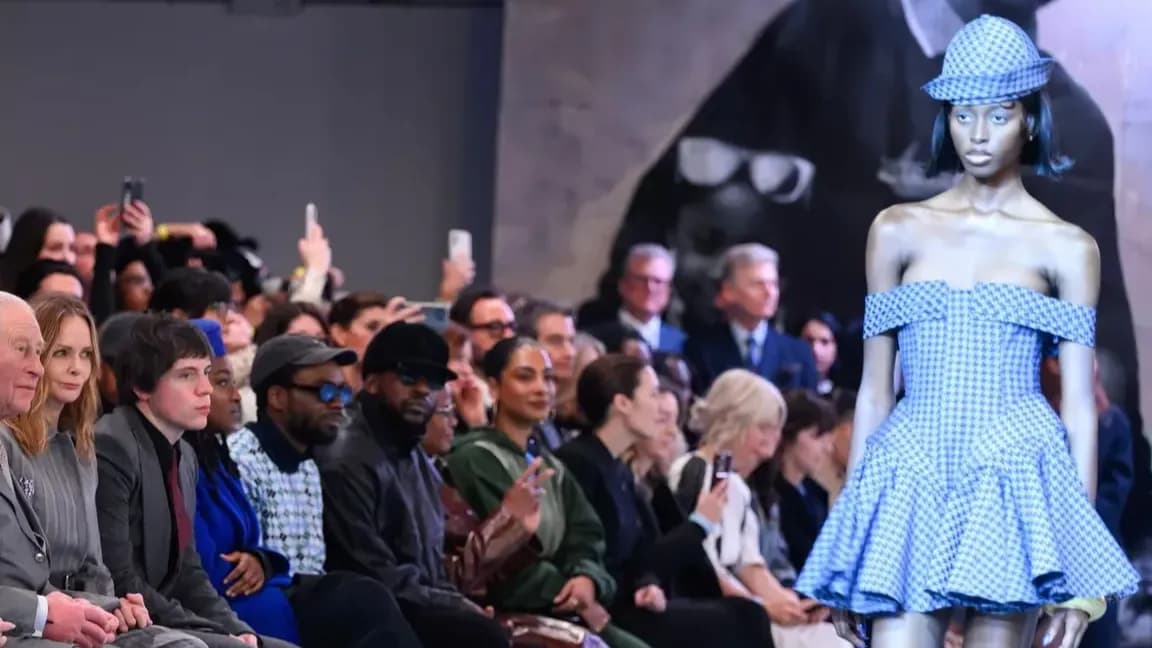
And yet, the most recent fashion shows suggest that this hesitation is not the whole story. In some corners of the industry, the willingness to experiment and to take risks still finds its way through.
Copenhagen Fashion Week leading the way
Copenhagen Fashion Week established mandatory sustainability requirements in 2023 in order for brands to participate in the fashion shows. These cover strategic sustainable direction, safe working conditions, responsible consumer engagement, a plastic-free showcase, smart material choices and design with longevity in mind. This shift is now visible in how other fashion capitals are responding, either adopting the Copenhagen framework or introducing similar standards. And especially this year, London Fashion Week didn’t disappoint for its focus on innovation in both materials and design.
Two biomaterials in particular have stuck with me.
-
This banana leather by Banofi, a company based in Kolkata, India. They are using the waste derived from local banana crops to create a product that mimics leather in its look, touch, and smell. This solution tackles both the harmful leather industry and the millions of tons of banana waste happening every year.
-
This stuffing material by Ponda, a London-based company developed from Typha Latifolia, a plant that naturally grows in wetlands. Their goal is to restore the local wetland through regenerative processes while producing something useful and innovative for the fashion industry. Both of these materials were present at London fashion week.
Alongside material innovation, I was glad to see a stronger presence of upcycling on the runway. Repurposed leftover or deadstock fabrics and new ways of constructing garments were central to the work of designers like Chopova Lowena, Evan Hirsch, and Lou de Bètoly.
This demonstrates that fashion doesn’t necessarily need new materials. Sometimes it comes from reworking what already exists.
London, New York and Berlin were surfing the upcycling wave this year, feeling less like a niche experiment and more like a shared direction.
With the February Fashion shows, I perceived a step towards the direction of what sustainable fashion research has been preaching for years: innovations, both technical and social, help shift the industry toward less harmful models.
At the same time, it is impossible to turn a blind eye to the systemic issues of the industry. Overconsumption, overproduction, land use, loss of biodiversity, lack of social compliance remain deep unsolved issues.
Upcycled collections or experimental biomaterials, especially when presented at small scale during fashion weeks, still matter. These practices shed light on alternative future scenarios, where the industry would have more of a positive impact on people and the environment.
The neighbour's grass is always greener…
Fashion Week is a great stage to showcase novelties. Looking beyond our own ‘garden’ often reveals how much is already growing within it. And in the Netherlands, there are plenty of innovators and hubs on textiles that just need to be discovered, trusted, and ultimately used. From 3D printing and biomaterials to cultivated leather, chemical recycling, and renewed attention to craft and local making, these are just some of the developments happening in the Dutch textile industry. Here are some examples to explore.
-
Hul Le Kes is a brand based in Arnhem that wants to redefine the fashion industry by using only upcycled textile and timeless craftsmanship. Through their items they want to celebrate imperfections as a form of authenticity, just like nature thrives in diversity.
-
Designer Amarins Bokma, based in Friesland, creates high-visibility jacquard-woven fabrics using reflective yarns that remain invisible on the surface of the textile. Quite a useful innovation for people living in a country where daylight hours are limited in winter.
-
Qoriom is a biotech company based in Maastricht that makes cultivated, animal-free leather using cell-based technology to reduce the environmental impact of traditional leather production
Final reflection
This article started as a glimpse into the uncertainty of where the world is heading.
In a way, it is also a reminder—to myself as much as to anyone reading—that even small glimpses can shift how we think about living, consuming, producing, and working. Not because they offer clear answers, but because they open space for new questions.
Certainly, this is not easy. But staying curious about innovation in fashion, especially in moments of uncertainty, might be one of the ways forward.
Written By

Related Blogs
The role of investors in the slow fashion transition
In 2026, investors serve as the primary financial and strategic backbone for the slow fashion movement, shifting the industry from volume-driven "fast fashion" toward quality, longevity, and circularity.
Luxury Fashion’s Shift to Tech: A Quest for Authenticity or a Last-Ditch Bid for Relevance?
For decades, luxury fashion lived in a world apart; a realm of exquisite materials, meticulous craftsmanship, and an aura of inaccessibility.